
Having retired, I slimmed down my camera collection. Sold my R7 and 5D MKIV and got an R6 MKIII. The R7 is a great camera, but I just didn’t like using it as much as the 5D – partly it felt small, and partly the viewfinder didn’t seem big enough with my eyesight. And yes, I do generally use the viewfinder unless its on a tripod.
I looked at Ken Rockwell’s detailed review, so I knew it would be a good replacement for my EF lenses on an adapter. If you want lots of detail, look here https://www.kenrockwell.com/canon/eos-r/lenses/24-105mm-stm.htm
It may not provide f4 at all focal lengths, but I wanted a lightweight walk around lens, essentially for tourist use.
Now I know that Ken shoots jpg, and that my camera does all sorts of clever corrections for jpg’s, but leaves Raw files alone. I normally shoot Raw, to give me a bit more leaway if I don’t get it right for some reason.
I took a couple of shots to try it out. I must admit, having been brought up with lenses designed to get it right from the start, I was quite surprised at how bad it was uncorrected. Fortunately, Lightroom does a great job of applying lens corrections to Raw files. Here’s a before and after sample. The first is “as is” auto (you can see the settings) – I haven’t bothered to correct anything, like exposure or straightening!
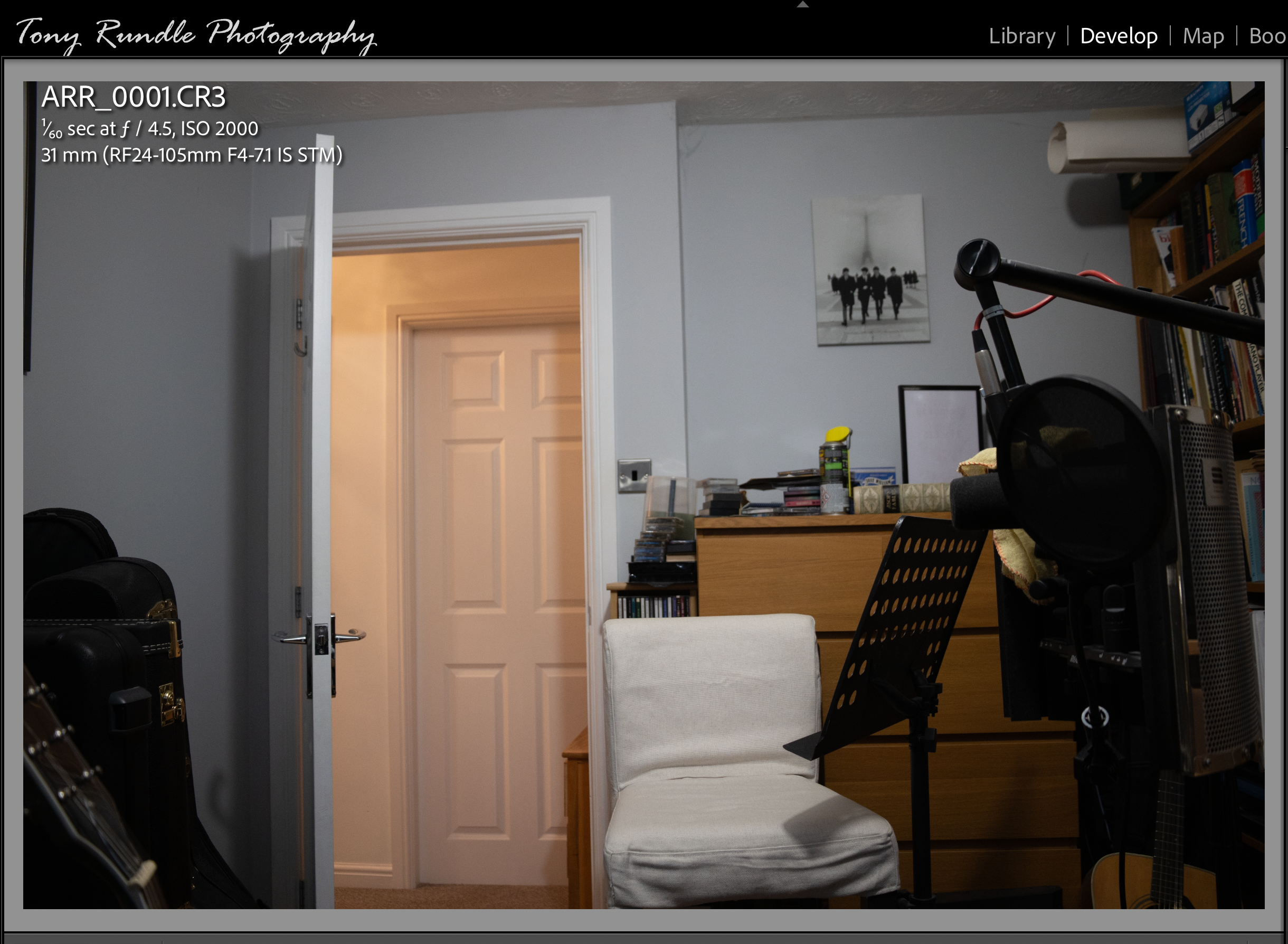
Before Correction
The next is with just Lightroom’s auto lens corrections.
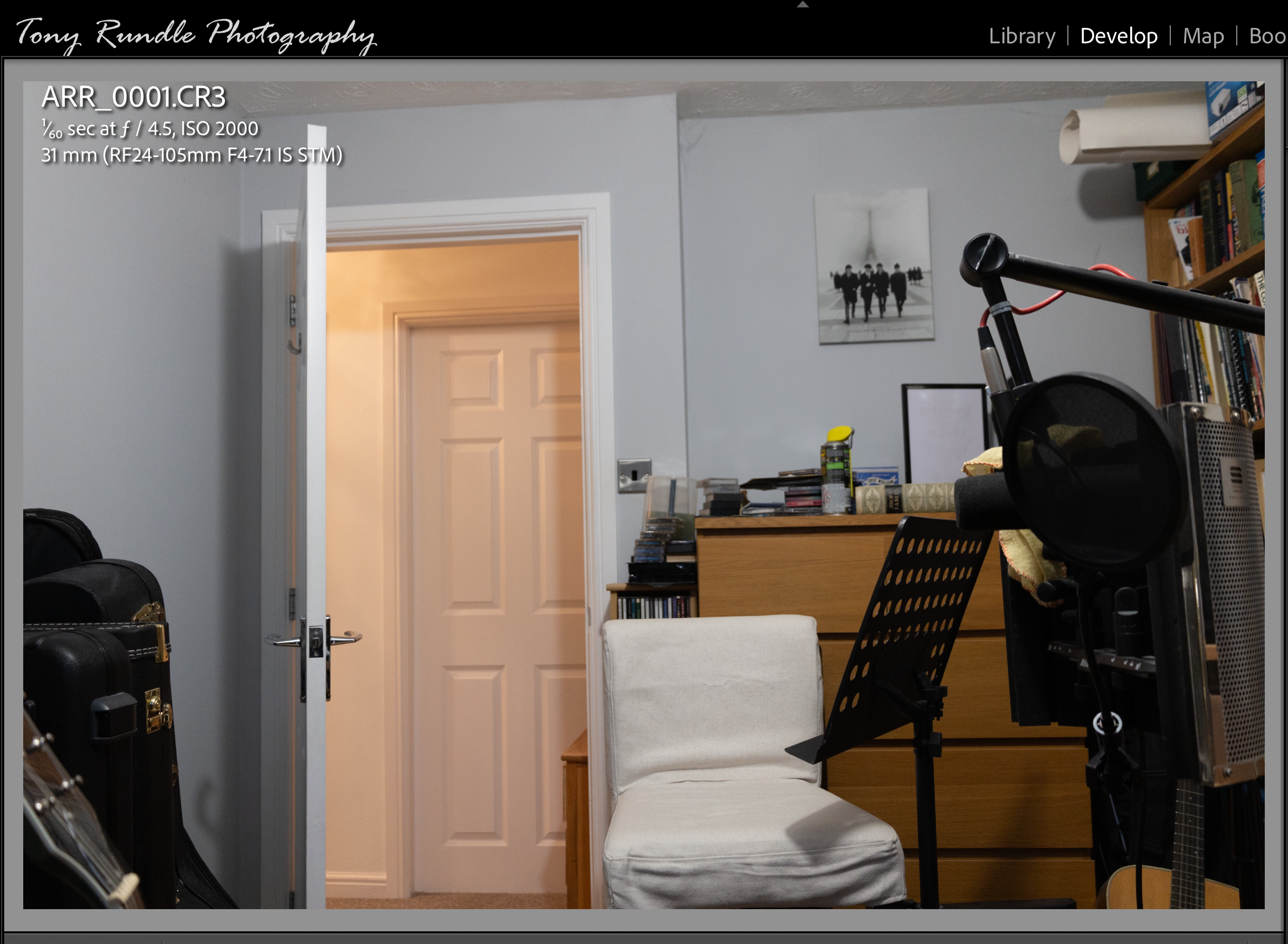
The door is straight and the vignetting has been corrected, so you can see bits of guitar in the bottom corners.
I had a quick look at Canon’s DPP software and it does the same thing, so anyone buying this lens can use DPP to create a good image. But, if the software you’re using doesn’t have auto lens profile adjustment, it will add an extra stage. By the way, I also opened the photo with Apple Photos, and it also seems to apply corrections automatically – good for them.
To summarise, It seems an actually very useful lens. I was shocked at how bad it was without correction, but that seems to be the trade-off nowadays, and the correction works fine. I guess I shall just have to get used to relying on software to fix lens issues as well as exposure, colour, cropping and everything else we use it for!
By the way, as someone who was brought up worrying that an ISO200 film might have too much grain, I find it hard to believe how well modern cameras work at the equivalent of insane film speeds – I hardly ever worry about it any more.